Furnace Short Cycling on Cold Mornings? What's Triggering It
Quick Answer: If your furnace fires up, runs for a couple minutes, shuts off, then starts again a few minutes later — especially on the coldest mornings of the week — you're dealing with short cycling. The usual suspects are a clogged air filter choking off airflow, a furnace that's oversized for your home, a dirty flame sensor, or a thermostat that's misreading the room. Some of those are a five-minute fix. Others are early warnings you shouldn't ignore, because the stop-start pattern wears out the same parts a normal cycle would use gently.
You're standing in the kitchen at 6 a.m., coffee in hand, and you notice the furnace has kicked on and off three times in the last fifteen minutes. It never quite gets the house comfortable before it shuts down again. Twenty minutes later, it does it again. On the coldest mornings of the year, this pattern gets worse, and it's tempting to write it off as the furnace "working hard because it's cold out."
Sometimes that's true. A furnace that cycles more often on a 5-degree morning than it does on a 40-degree afternoon isn't broken — it's responding to a bigger heat loss. But there's a difference between a furnace running more often and a furnace running short. If it's starting up, hitting a wall, and shutting down again in under five minutes, over and over, before it ever satisfies the thermostat, that's short cycling. Cold mornings tend to be exactly when it shows up, because that's when every weak point in the system gets tested at once.
What Counts as Short Cycling (and What Doesn't)
A furnace that's sized and running correctly will typically stay on for ten to twenty minutes per cycle, then rest for a similar stretch before firing again. That rhythm holds up even in cold weather. The furnace just runs more total cycles per day because the house is losing heat faster.
Short cycling looks different. The burner lights, you feel warm air for a couple of minutes, and then it shuts off, often followed by the blower running on its own for a while before everything goes quiet. A few minutes later, the whole thing repeats. The house never quite reaches the temperature on the thermostat, so the furnace keeps trying and keeps quitting.
Cold mornings amplify this because your system is doing the most work right when whatever's already marginal, airflow, ignition, a control setting, has the least room for error.
The Airflow Culprit: A Filter That's Had Enough
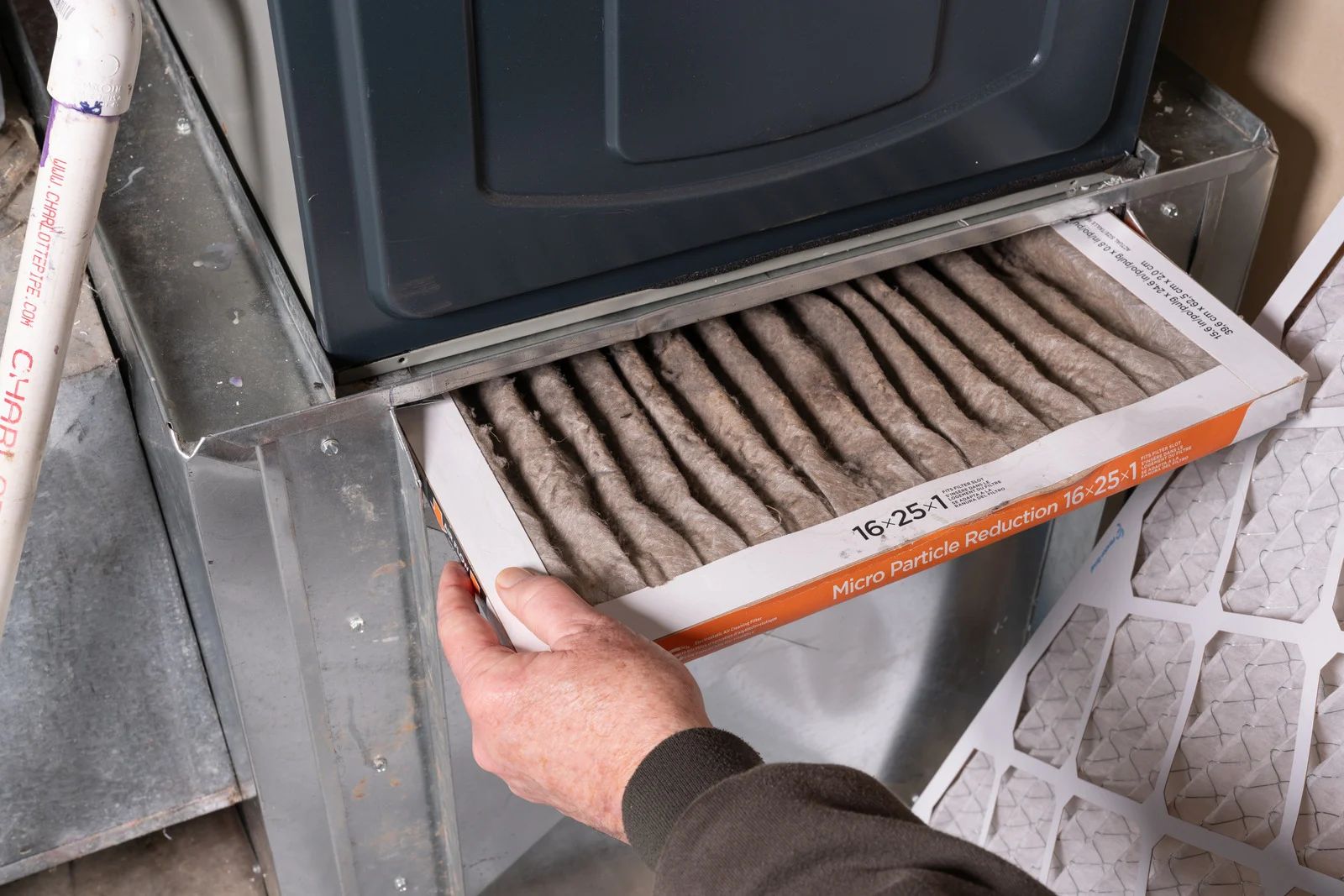
This is the most common reason a furnace short cycles, and it's the first thing worth checking before you assume something's actually broken. A furnace pulls return air through a filter, warms it, and pushes it back into the house. When that filter is packed with dust and pet hair, the furnace can't pull in enough air to move across the heat exchanger properly.
Restricted airflow means the heat exchanger runs hotter than it's built for. A safety device called the high-limit switch watches that exact temperature, and its only job is to shut the burner down before things get dangerous. So the furnace lights, heats up too fast because air can't move through it, trips the limit switch, and shuts off. A few minutes later it resets and does it again.
This shows up more on cold mornings because the furnace is running longer and harder to keep up, pushing air through that clogged filter more aggressively and hitting the limit switch faster. Pull the filter and hold it up to a light. Can't see light through it? That's very likely your answer, at least in part.
A Filter Check Worth Doing Today
Before you call anyone, swap the filter or clean it if it's a reusable type. It costs five minutes and rules out the single most common cause of this exact problem. Mark your calendar to check it monthly through the heating season. Colorado's dry winter air kicks up more dust in a house than most people expect, and filters here tend to load up faster than the box suggests.
When the Furnace Itself Is the Wrong Size
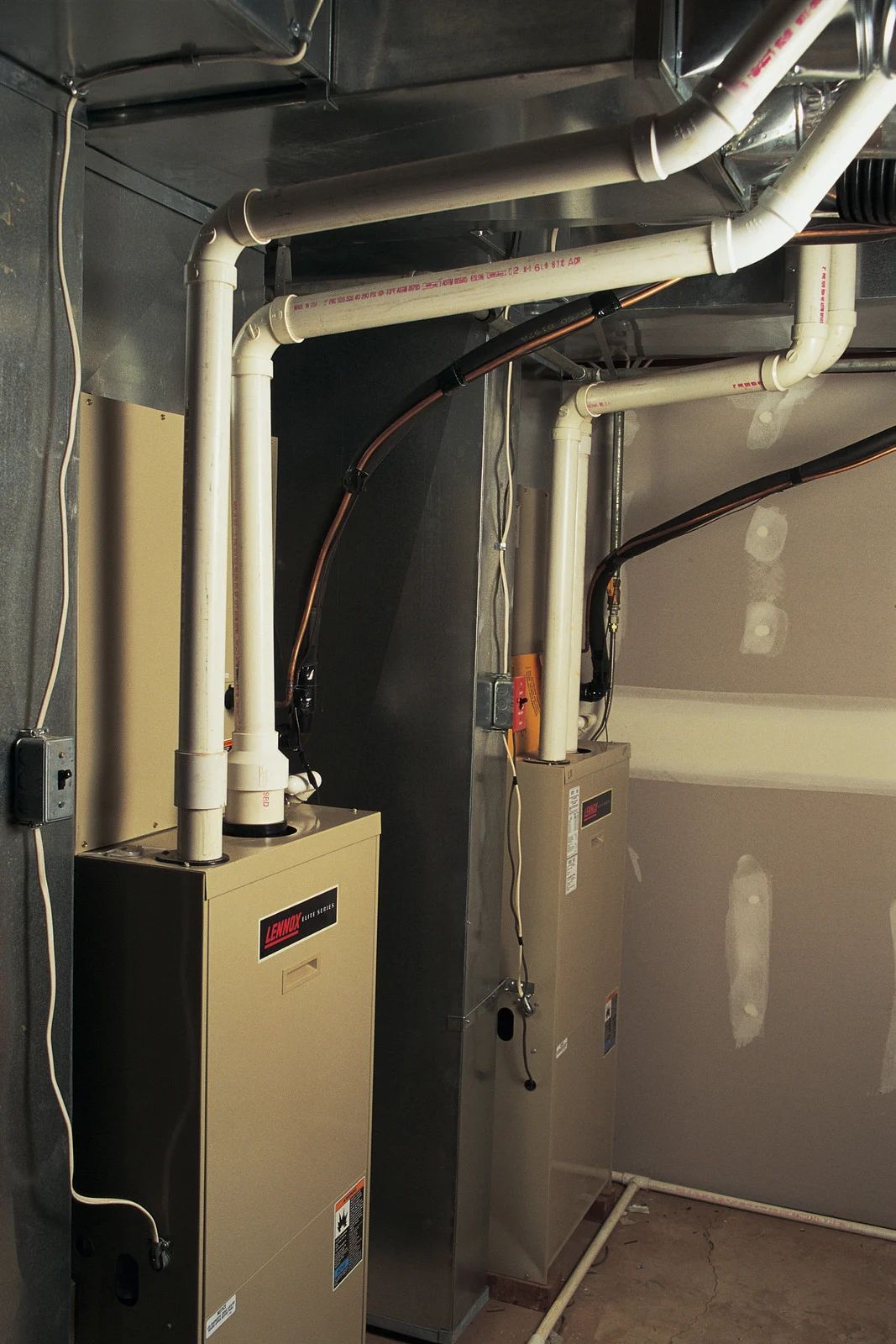
Furnace sizing gets decided once, usually at installation, and it's easy to get wrong if whoever set it up skipped a proper room-by-room load calculation. An oversized furnace has more heating capacity than your house needs, so it satisfies the thermostat fast, sometimes in just a few minutes, then shuts off. But the burst of heat it just pushed out takes a while to spread evenly through the ductwork and rooms. The thermostat senses the temperature drop again almost immediately and calls for heat right away. What you end up with is a furnace that's technically working, just working in short, inefficient bursts instead of long, even ones.
This tends to show up most clearly on the coldest mornings, when the swing between "furnace just ran" and "room feels cold again" is at its sharpest. If your furnace was installed as a straight swap for an older unit years back, sizing mismatches are common. A unit picked for a previous layout of the house, or oversized "to be safe," doesn't behave the way a properly matched system does.
There isn't a homeowner-level fix for this one. It's a design issue built into the equipment, not something you can clear with a filter change. If you've ruled out airflow problems and the short cycling keeps happening, sizing deserves a real look from someone who can measure your home's actual heat loss against your furnace's output.
Ignition Trouble: Flame Sensors, Igniters, and Old Thermocouples
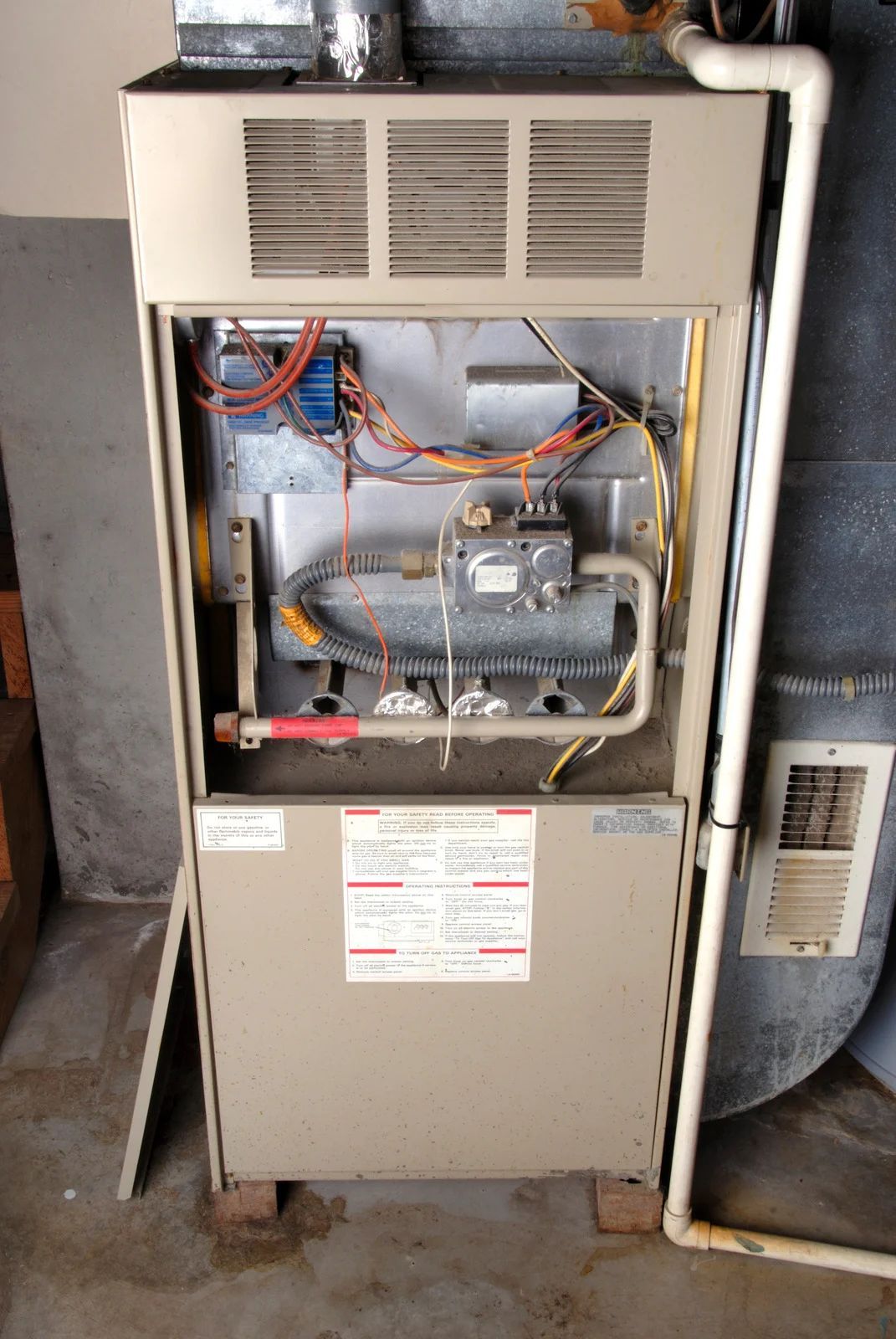
Every gas furnace needs to confirm a flame is actually burning before it lets gas keep flowing. Otherwise you'd have raw gas pouring into your ductwork with nothing to ignite it. Newer furnaces use a flame sensor, a small metal rod that sits in the flame path and reads whether combustion is happening. Over time, that rod picks up a thin layer of carbon and oxidation from normal combustion. Once the coating builds up enough, the sensor can't reliably detect the flame anymore, even though the furnace is burning just fine.
When the sensor loses that signal, the control board assumes something's wrong and shuts the gas valve, often within seconds of ignition. The burner tries again a short time later. Same result. That rapid on-off-on-off pattern is one of the clearest signs of a dirty or failing flame sensor, and it tends to get worse as the furnace runs more, which is exactly what happens on the coldest mornings.
Older furnaces that still run a standing pilot light and thermocouple instead of electronic ignition see a similar thing happen through a different part. The thermocouple has to sense the pilot flame's heat to keep the gas valve open. A weak pilot, a draft blowing across it, or a thermocouple that's degraded with age can cause the same stop-start pattern, especially as the furnace works harder against cold outdoor air.
Thermostat Placement and Calibration
Your thermostat is only as good as the information it's reading, and where it's mounted matters more than most people realize. A thermostat installed near a supply vent, in direct morning sun through a nearby window, on an exterior wall, or close to a drafty door can read a temperature that doesn't match the rest of the house. If it senses warm air blowing directly on it, it may decide the house has reached temperature and shut the furnace off, even though most of the home is still cold. A few minutes later, once that pocket of warm air clears, it reads cold again and calls for heat, and the cycle repeats.
Cold mornings make this worse because the gap between "air blowing on the thermostat" and "actual room temperature" is at its widest. An aging or poorly calibrated thermostat can create the same effect even in a good spot, simply by drifting from an accurate reading over years of use.
Warning: Don't treat a thermostat problem as harmless just because it seems like a minor inconvenience. A furnace short cycling because of a bad read is still putting extra wear on the ignition system, the blower motor, and the limit switch every single time it starts and stops. Left alone through a full winter, what looked like a small annoyance can speed up the failure of parts that cost a lot more to deal with than the thermostat itself.
Why the Stop-Start Pattern Costs You More Than Comfort
Every time a furnace ignites, several components take a small hit. The igniter or pilot assembly works to establish flame, the blower motor spins up and down, the control board runs through a start and stop sequence, and the limit switch or flame sensor does its job of watching for problems. A furnace running a normal cycle length does this a reasonable number of times per day. A furnace short cycling might do it dozens of times more.
That repetition adds up. Igniters have a limited number of start cycles before they fail. Blower motors take more mechanical stress starting and stopping than they do running continuously. Control boards process more signals and switch more relays. None of this happens overnight, but a furnace that's been short cycling through an entire cold snap has effectively aged faster than one that's been cycling normally, even if the calendar says otherwise.
There's a comfort cost too. A furnace that shuts off before the house reaches temperature never lets you feel the full benefit of the heat it did produce, which is part of why cold mornings feel colder than they should even with the furnace clearly running.
What to Check Before You Call Anyone
Tip: NRun through this order before assuming the worst: check and replace the air filter first, confirm nothing is blocking supply or return vents, then take a look at where your thermostat is mounted relative to sun, drafts, and vents. These steps resolve a meaningful share of short-cycling complaints on their own, and they cost you nothing but a few minutes on a Saturday morning.
If you've handled all of that and the pattern continues, particularly if it's worse specifically on the coldest mornings rather than throughout the day, you're looking at something mechanical or electrical inside the furnace itself. That could be a flame sensor that needs cleaning, a limit switch that's failing, a thermostat that needs recalibration or replacement, or a sizing mismatch baked in at installation. Any of those calls for a technician who can test the components rather than guess from the symptoms.
Common Questions About Furnace Short Cycling
Does short cycling mean my furnace is about to fail completely?
Not necessarily. It often signals one specific part needing attention rather than total system failure. But ignoring it lets the cause keep stressing other components over time.
Why does this only seem to happen on the coldest mornings?
Cold mornings put the most demand on your system at once, exposing weak points milder weather hides. A slightly dirty sensor or restricted filter shows up clearly under that load.
Can I keep running the furnace like this until spring?
You can, but every cycle adds wear to the same parts. A quick fix in November can turn into a bigger repair by February if the cause keeps getting ignored.
Is it normal for the furnace to run more often in extreme cold?
Yes. Running more often because the house loses heat faster is expected. The concern is each run being unusually short, not the total number of cycles increasing.
Catching Short Cycling Before It Gets Worse
Furnace short cycling on the coldest mornings of the year isn't something to just live with until it works itself out, because it usually doesn't. Every stop-start cycle puts extra wear on the exact parts, igniters, limit switches, blower motors, that are expensive and inconvenient to replace once they actually fail. A clogged filter or a poorly placed thermostat might explain it. A cracked heat exchanger or a sizing mismatch might too, and telling those apart takes real diagnostic work, not guesswork on a cold morning.
With over 21
years of experience, 303 Heating & Air, Inc
has been diagnosing exactly this pattern across Aurora and the south Denver metro, tracing short cycling back to its real cause rather than assuming the obvious answer. That distinction matters most during the coldest stretch of the season, when every weak point in a system gets tested at once. Getting it looked at now keeps a small annoyance from turning into a bigger repair by the time winter really settles in.