Furnace Blowing Cold Air at Altitude? Why It Happens and What to Check
Quick Answer: A furnace blows cold air most often because the thermostat fan is set to "On" instead of "Auto," which runs the blower even when the burners are off. Other common causes are a clogged filter that overheats the furnace and trips its safety limit, a dirty flame sensor that shuts off the gas, or an ignition fault. A few of these you can check in minutes; anything involving the burners, flame, or gas should be left to a technician.
It is the first genuinely cold morning of the season. You bump the thermostat up, the furnace kicks on, and you wait for warm air at the vents. Instead, what comes out feels cool, then cold. The house is not warming up, and you are standing over a register wondering whether you have a real problem or a five-minute fix.
A furnace blowing cold air is one of the most common heating calls there is, and the cause ranges from something you can correct yourself to something that needs a technician the same day. The trick is knowing which is which before you start poking around. Here is what is actually happening inside the furnace, what you can safely check, and why living at altitude in the Denver metro adds a wrinkle that homeowners at sea level never deal with.
Start With the Thermostat: The Most Common Cause
Before assuming the worst, check the simplest thing. The single most frequent reason a furnace blows cold air is a thermostat fan setting, not a broken furnace at all.
Your thermostat has a fan switch with two positions: "On" and "Auto." On "Auto," the blower only runs when the furnace has actually heated the air, so you feel warmth. On "On," the blower runs continuously, all day, even during the long stretches when the burners are off between heating cycles. During those off stretches, it is pushing room-temperature or cool air through the vents, and it feels like the furnace failed.
The fix: Set the fan to "Auto." Then wait through a full cycle. If the air turns warm within a few minutes and stays warm when the burners are firing, the furnace is fine and the setting was the culprit. This one change solves a surprising share of cold-air complaints.
If the fan is already on "Auto" and you are still getting cold air, the cause is inside the furnace, and the next suspects are airflow and the burner system.
Airflow Problems: When a Dirty Filter Shuts Things Down
A furnace needs steady airflow across its heat exchanger. When that airflow is choked off, the furnace overheats and protects itself, and cold air is often the result.
A clogged filter is the usual offender
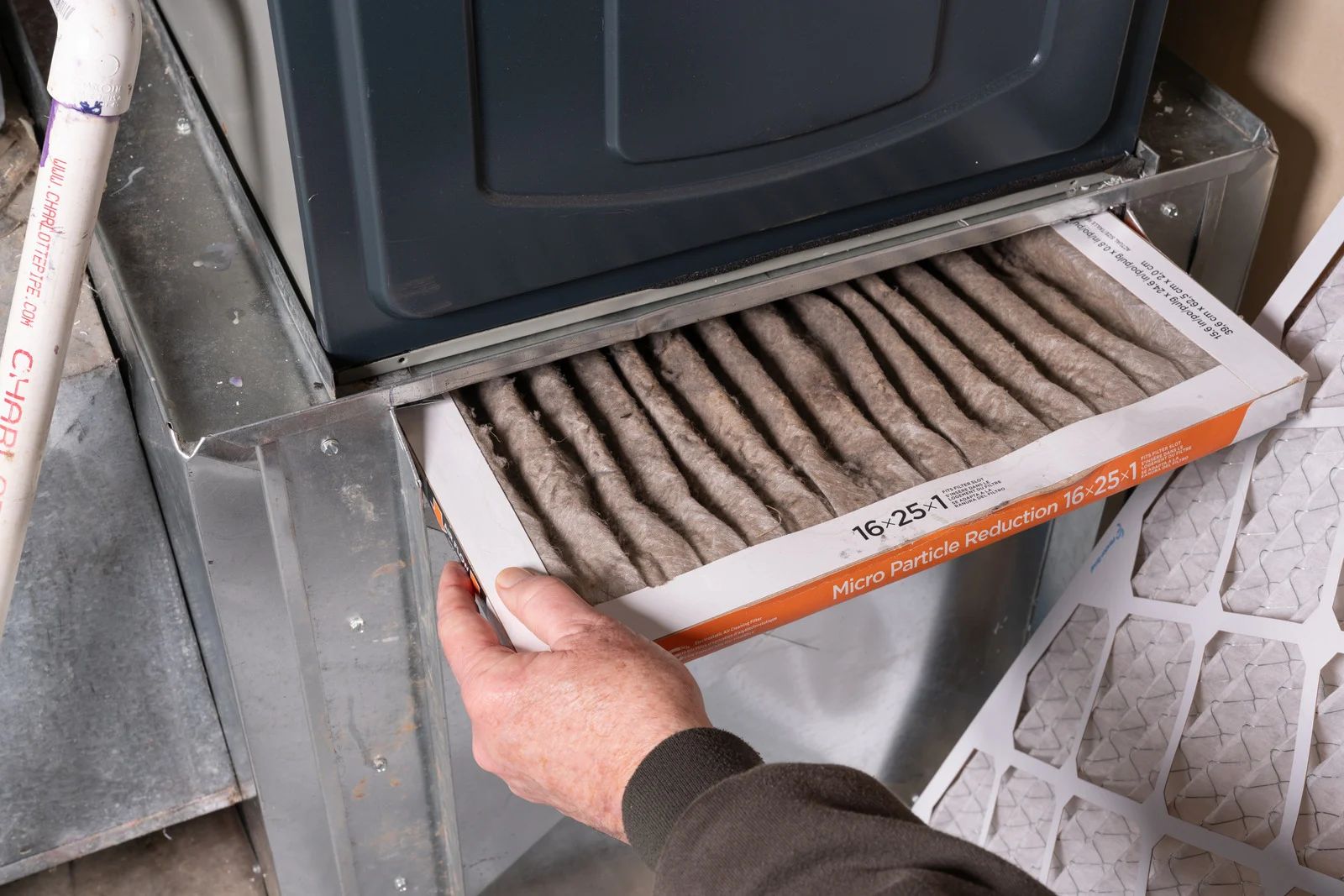
When the filter is packed with dust, not enough air moves across the heat exchanger. The furnace runs hotter than it should, and a safety device called the high-limit switch shuts the burners off to prevent damage, while the blower keeps running to cool things down. You feel that cool-down air at the vents. Manufacturer guidance, including from major brands like Carrier, lists a dirty filter as a leading cause of cold-air output for exactly this reason.
Closed or blocked vents make it worse
Too many closed supply registers, or furniture and rugs covering returns, restrict airflow the same way a dirty filter does and can trip the same safety limit.
The fix you can do
Pull the filter and hold it up to a light. If you cannot see light through it, replace it. In the dry, dusty Front Range air, filters tend to load up faster than the calendar suggests, so a filter that looked fine last month may already be due. After a fresh filter, give the system a full cycle to reset.
If a clean filter and open vents do not bring the heat back, the issue has moved into the burner and ignition system, where the checks stop and a technician's diagnosis begins.
The Burner Side: Flame Sensor, Ignition, and Why Heat Cuts Out
Modern furnaces have a sequence of safety checks that must all pass before and during a heating cycle. When one of them fails, the gas valve closes, the burners stop, and the blower keeps moving air that is no longer being heated. Several common failures live here.
A dirty flame sensor
The flame sensor is a thin metal rod that confirms a flame is actually present once the gas lights. Over a season it builds up a film of dust and oxidation. When it can no longer "see" the flame clearly, the furnace assumes something is wrong and shuts the gas off as a safety measure, often after just a minute or two of running. The blower then pushes cold air. A dirty flame sensor is one of the most frequent causes of a furnace that lights, runs briefly, then blows cold.
Ignition faults
If the igniter or ignition control is failing, the burners may not light at all, leaving only the blower running and cold air at the vents.
Condensate backups on high-efficiency units
High-efficiency furnaces produce water as they run and drain it away. If that drain clogs, a safety switch can shut down the burners, again leaving cold air.
These are not homeowner fixes. They involve the gas system, combustion components, and safety switches that a licensed technician is trained to test and clean. Cleaning a flame sensor, confirming proper ignition, and clearing a condensate fault take the right tools and the knowledge to do it without creating a hazard.
Tip:
Note exactly when the cold air starts. If the furnace lights, runs for a minute or two, and then blows cold, that pattern points strongly toward a flame sensor or ignition issue and is worth telling your technician. If it never produces heat at all, the cause is more likely ignition or the gas supply. That one detail often shortens the diagnosis.
The Altitude Factor: Why Denver Furnaces Are Different
Here is the piece homeowners in lower elevations never have to think about. Combustion depends on oxygen, and there is measurably less of it in the thin air along the Front Range.
Air pressure drops roughly 4 percent for every 1,000 feet of elevation. The National Fuel Gas Code reflects this directly: gas appliance input ratings are reduced by about 4 percent for each 1,000 feet above 2,000 feet of elevation. Sitting around 5,280 feet, the Denver metro is well into the range where a furnace must be set up for altitude, which means the gas input is "derated" and the burners are adjusted so combustion stays clean and complete.
When a furnace is not properly set up for elevation, combustion can run poorly. That can show up as weak heat, short or troubled burner cycles, and the kind of incomplete combustion that triggers safety shutdowns, all of which can leave you feeling cold air. It also tends to dirty up combustion components like the flame sensor faster, which loops back to the burner problems above. A furnace that was correctly derated and tuned for its elevation simply runs cleaner and more reliably through a Colorado winter than one that was installed as if it were at sea level.
This is also why a furnace that worked fine somewhere else, or one installed quickly without an altitude adjustment, can develop nagging heat problems here. The fix is a proper altitude setup by a technician who works at elevation every day, not anything you adjust at the thermostat.
Warning: If you ever smell gas, hear a loud boom when the furnace lights, or see soot around the unit, stop troubleshooting and treat it as urgent. A delayed ignition that booms, or any gas odor, signals a combustion problem that can be dangerous. Shut the system off and call for professional help rather than running it to see if it clears.
What You Can Check vs. What Needs a Pro
To keep it simple, here is the dividing line.
Safe for you to check: the thermostat fan setting ("Auto," not "On"), the air filter (replace if you cannot see light through it), and supply and return vents (open and unobstructed). Run a full cycle after each change.
Leave to a technician: anything involving the flame sensor, igniter, gas valve, condensate system, heat exchanger, or altitude setup. These require testing, cleaning, and combustion knowledge, and several touch the gas system directly.
If the easy checks do not restore heat, that is your signal that the problem is on the burner side, and continuing to cycle the furnace will not fix it. A same-day diagnosis gets you warm again faster and rules out the combustion issues you do not want lingering through a cold snap.
Frequently Asked Questions
Why does my furnace blow cold air right after it starts, then quit?
That pattern, lighting and running briefly before blowing cold, most often points to a dirty flame sensor or an ignition fault. The furnace lights, cannot confirm a stable flame, and shuts the gas off as a safety measure while the blower keeps running. It is a common and very fixable repair.
Can a dirty filter really make my furnace blow cold?
Yes. A clogged filter restricts airflow, the furnace overheats, and its high-limit switch shuts the burners off while the blower runs to cool the unit. You feel cool air at the vents. Replacing the filter and running a full cycle often resolves it.
Is cold air from the furnace dangerous?
Cold air by itself usually is not dangerous, but some of its causes can be. If you smell gas, hear a boom at ignition, or see soot, shut the furnace off and get professional help right away rather than continuing to run it.
Does high altitude actually affect my furnace?
It does. With about 4 percent less air pressure per 1,000 feet, a furnace in the Denver metro must be derated and tuned for elevation. A unit that was not set up for altitude can run with poor combustion, which leads to weak heat and safety shutdowns.
Why is only some of the air cold while other vents feel warm?
Uneven temperatures across vents usually point to airflow or distribution issues rather than the burners, such as a restricted filter, blocked returns, or duct problems. If the furnace itself is producing heat but some rooms stay cold, that is worth a technician's look at airflow.
How often should I change my filter in Colorado's dry air?
Check it monthly during heating season. The dry, dusty Front Range air loads filters faster than many calendars assume, so a filter that looked acceptable a few weeks ago may already be restricting airflow enough to cause problems.
Getting Warm Air Back
A furnace blowing cold air sits in that frustrating middle ground: sometimes it is a thermostat switch you can flip in ten seconds, and sometimes it is a burner-side fault that needs a trained hand the same day. Working through it in order, thermostat first, then the filter and vents, then accepting that the flame sensor, ignition, and altitude setup belong to a technician, gets you to the real answer without guesswork or risk. And in this climate, a furnace that has been properly derated and tuned for elevation is the one that keeps the cold mornings short.
Get the heat back the same day — When the easy checks don't fix the cold air, the cause is usually on the burner side, and a flame sensor, ignition, or altitude-setup problem only gets more disruptive the longer a cold snap lasts. With over 21
years of experience serving Aurora, Colorado, 303 Heating & Air, Inc
diagnoses cold-air furnace problems across the south Denver metro with honest, plain-English answers and the altitude know-how a Colorado furnace needs. Reach out to schedule
furnace repair
and stop circling the thermostat.